explainer · 8 min read
NASA let pilots nap in the cockpit. What 26 minutes did, and how to power nap
A 1994 study of 747 crews over the Pacific gave the power nap its famous numbers. What it measured, and how long and when to nap.
By ThriveBrook editors · Updated October 2026
In the early 1990s, NASA scientists wired 21 airline pilots with brainwave recorders and let some of them nap in the cockpit of a Boeing 747, on purpose, over the Pacific. The short, planned sleep they tested is what most people now call a power nap. That means a daytime nap of well under an hour, timed so you wake up before deep sleep takes hold.
That study is where the famous “26 minutes” comes from, and it usually gets retold wrong. What you can use from it fits in one line. This week, take one 20-minute nap before 3 p.m., with an alarm set for 25 minutes.
Why NASA cared about tired pilots
Long-haul crews in that era flew multi-day trips across time zones, often overnight, and they were already dozing off. The NASA report cites an earlier observation study of three-person international crews in which someone napped in the cockpit on 5 to 20 percent of flights, almost always unplanned.
Those naps happened with no rules about when or for how long. NASA’s Ames Research Center and the Federal Aviation Administration, which co-sponsored the work, wanted to know whether a planned nap at a quiet moment would beat the unplanned kind.
The pilots were short on sleep, too. By the ninth day of the trip, 86 percent of them had built up a sleep debt that averaged about 9 hours.
The same thing happens to drivers on long trips. If you feel yourself fading behind the wheel, pull over somewhere safe for a short nap before the sleepiness gets worse.
How the cockpit nap worked
The team rode along on a regularly scheduled trip across the Pacific that ran through Honolulu and Tokyo’s Narita airport. Crews were assigned at random, so 12 pilots got a planned rest period and 9 kept flying as usual.
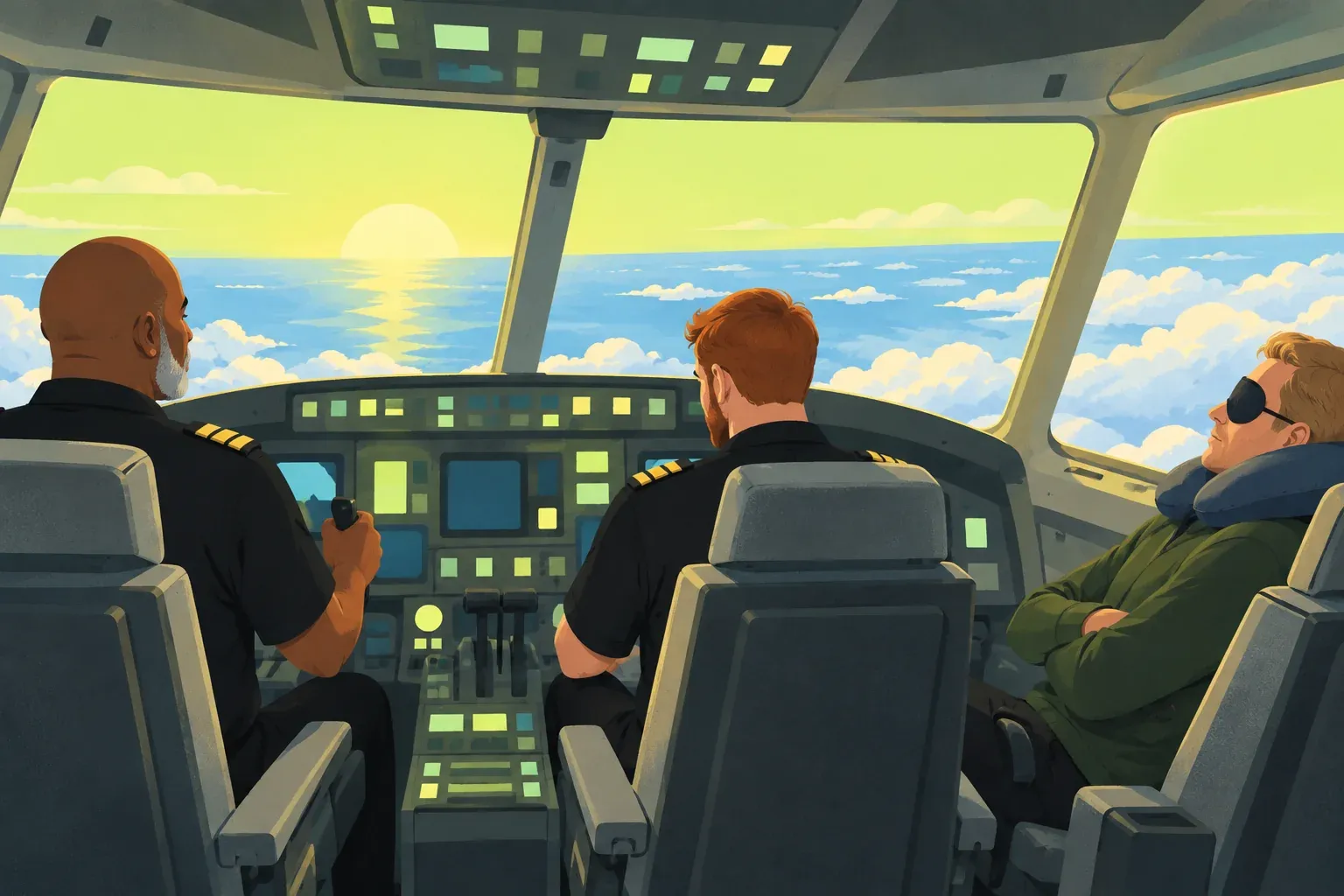
The rest followed a strict script. Each break opened with 3 minutes of setup, then a 40-minute rest with an eye shade, earplugs and a neck pillow on offer. A 20-minute recovery came after, so the pilot was fully awake before taking back any duties, and every break had to end at least an hour before the plane began its descent.
That recovery block is the part worth copying. Leave a gap of 10 to 15 minutes between waking and anything that needs your full attention, which is the shorter recovery the report itself said would likely be enough.
What 26 minutes of sleep did
The pilots with a rest slot fell asleep fast, in 5.6 minutes on average, and nearly always managed to sleep. Their naps averaged 26 minutes. Deep sleep made up only about 8 percent of it, and the authors suggested that may be why grogginess didn’t seem to be a problem.
The payoff showed up late in the flight, when landing is hardest. The team scanned brainwave and eye-movement recordings from roughly the last 90 minutes of each flight, through descent and landing, for microevents, which are drowsy lapses lasting 5 seconds or more.
The pilots who never got a rest averaged 6.37 microevents each. Those who napped averaged 2.90, less than half as many.
Reaction-time tests pointed the same way. Pilots without a nap got steadily slower across the trip and within each flight, while the nappers held steady. Across all the in-flight tests, the no-rest group logged 124 slow responses, the ones that took longer than half a second. The napping group, though larger, logged 81.
The control group made the case on its own. Told to keep flying normally during their control window, four of the no-rest pilots fell asleep anyway, five times in all, for anywhere from a few minutes to more than 10. If you tend to nod off at your desk in the afternoon without meaning to, you could try a planned nap earlier in the day instead.
The 26-minute myth
You’ll often see the study summed up as a 26-minute nap that raised performance by 34 percent and alertness by 54 percent. Those figures are usually traced to a 1995 summary of the work that the same NASA team published in the Journal of Sleep Research.
The 54 percent lines up with the microevent gap, since 2.90 is about 54 percent below 6.37.
The 26 minutes was never a dose NASA prescribed. The pilots got 40 minutes to rest, and 26 minutes is simply how long they slept, on average. The report says plainly that the study “did not specifically address the effects of nap duration on alertness.”
If you’ve seen 26 minutes called the perfect nap, that’s an average being read as a recipe. Pick your nap length from the lab work below and from how you feel when you wake up.
Why the FAA left naps out
The findings never made it into US airline rules. Controlled rest was discussed when the FAA rewrote its pilot rest rules, and it was left out of the final rule published on January 4, 2012.
Later that month, an FAA legal interpretation covering private and business flights went further. It said a required pilot on a flight with no relief crew can’t take a controlled rest period either.
Europe went the other way. The European Union Aviation Safety Agency lets pilots take controlled rest in their seats under set conditions, and Canada, Australia and New Zealand allow it too. If you fly overnight as a passenger, nothing stops you from borrowing the pilots’ script in your own seat. Take a short sleep, then give yourself 15 quiet minutes before you have to deal with customs or a rental car counter.
How long a nap should last
The cleanest test of nap length came from Australia. In a 2006 study in the journal Sleep, researchers at Flinders University held 24 young adults to about 5 hours of sleep. The next afternoon they compared four short naps, from 5 to 30 minutes long, against no nap at all.
The 10-minute nap did best. Alertness and test scores improved right away and stayed up for as long as 155 minutes.
The 20-minute nap helped too, though the gains showed up about 35 minutes after waking. The 30-minute nap left people foggy at first, a hangover sleep researchers call sleep inertia, before it paid off.
Your options look like this:
| Nap length | What to expect | When it fits |
|---|---|---|
| 5 minutes | Little measurable benefit in the 2006 test | Rarely worth lying down for |
| 10 to 20 minutes | Light sleep, alert soon after waking | A workday slump |
| 30 to 60 minutes | Grogginess is more likely as deeper sleep starts | When you can spare time to shake it off |
| About 90 minutes | One full sleep cycle, often ending in lighter sleep | Before a night shift or after a very short night |
Sources: the 2006 Flinders University nap study and the Sleep Foundation’s napping guidance.
The Sleep Foundation puts the best nap length for most adults at about 20 minutes, and no longer than 30. NASA’s report made a similar point for the cockpit, suggesting a rest period of no more than an hour to avoid heavy sleep inertia.
If you wake up groggy from a 20-minute nap, cut the next one to 10.
The extra 5 minutes on the alarm covers the time it takes to drift off. The pilots needed 5.6 minutes, so 25 minutes on the clock buys roughly 20 minutes of actual sleep.
Timing it before 3 p.m.
On the ground, the clock matters for your night. The Sleep Foundation suggests napping at least 8 hours before bedtime, which for most people means before 3 p.m. A nap later than that uses up some of the sleep pressure that helps you fall asleep at night.
Count back from your own bedtime to find your cutoff. If you go to bed at 11 p.m., your window closes at 3 p.m. Early afternoon also matches the post-lunch dip, when most people get drowsy anyway.
An occasional nap is normal. If you need one every day even after a full night’s sleep, or you nod off when you’re trying hard to stay awake, bring it up with your doctor.
Try it after lunch
NASA’s pilots, most of them short on sleep, dropped off in under 6 minutes on average. Pick one weekday this week, set an alarm for 25 minutes, and recline somewhere dim before 3 p.m. Keep the next 15 minutes free of anything that needs a sharp mind, then notice how your late afternoon goes and how quickly you fall asleep that night.