listicle · 10 min read
Daylight saving time: a wartime fuel plan, a 1974 flop and how to adjust this fall
Clocks fall back November 1. Why the US changes them at all, which places refuse, and a 3-night plan for the switch.
By ThriveBrook editors · Updated October 2026

At 2 a.m. on Sunday, November 1, 2026, clocks in most of the US fall back one hour. In Chicago, by the formulas behind NOAA’s solar calculator, that moves sunset from 5:46 p.m. on Saturday to 4:45 p.m. on Sunday.
You can soften the jump. The American Academy of Sleep Medicine suggests going to bed 15 to 20 minutes later each night for a few nights before the fall change, and the plan at the end of this list puts dates on it. The history behind the switch is stranger than the switch, with a coal shortage, a fight with farmers and two cities a river apart on different clocks.
1. Railroad time, 1883
You can’t move the clock until everyone agrees on what time it is, and until 1883 nobody did. Most towns set their clocks by the sun at their own noon, and the Library of Congress counts more than 300 local sun times in use.
At noon on Sunday, November 18, 1883, the US and Canadian railroads reset their clocks to 4 standard zones on a telegraph signal. Congress didn’t write the zones into law until 1918, and today the Department of Transportation draws the lines. If you live near one, check which side your county sits on before you book an early appointment across it.

2. Germany’s coal plan, 1916
The first countries to move their clocks did it to save coal during a war. Germany and Austria-Hungary set clocks ahead one hour on April 30, 1916, and Britain followed three weeks later. Two Canadian towns, Port Arthur and Fort William in Ontario, had tried it on their own in 1908, but no nation had.
| Where | First clock change |
|---|---|
| Port Arthur and Fort William, Ontario (towns only) | 1908 |
| Germany and Austria-Hungary | April 30, 1916 |
| United Kingdom | May 21, 1916 |
| United States | March 31, 1918 |
The US moved its clocks almost a year after entering World War I.
The European Union ends summer time on the last Sunday in October, which falls on October 25 this year, a week before the US switch. If you have calls with someone in London or Berlin that week, the time gap is one hour smaller than usual.
3. Farmers win a repeal, 1919
The US first moved its clocks on March 31, 1918, under the Standard Time Act that President Woodrow Wilson signed on March 19. It lasted two summers.
Farmers were among its loudest opponents. Their work ran on sunlight and on when the cows needed milking, and the new clock left them less morning time to get milk and crops to market. Congress repealed the daylight saving part of the law on August 20, 1919, overriding Wilson’s veto, and the choice went back to cities and towns.
So the next time someone tells you daylight saving time was made for farmers, you can tell them farmers helped end it.

4. War Time, 1942 to 1945
The clocks came back for the next war, and this time they stayed ahead all year. From February 9, 1942, to September 30, 1945, the whole country ran one hour ahead of standard time, and the government called it War Time.
The Interstate Commerce Commission, which oversaw time zones then, said the goal was to spread out the evening peak in electricity use, according to the Congressional Research Service’s history of the law. That peak was close to exceeding the power left over for civilian needs, and it ran even higher in winter than in summer.
War Time is one of only two stretches when the country kept its clocks ahead through a winter. You’ll find both on the timeline below.
5. One rule for the clocks, 1966
After the war there was no federal rule, so each state and city picked its own dates or skipped daylight time entirely.
In May 1965, St. Paul and Minneapolis, the Twin Cities on either side of the Mississippi, ran on different clocks for two weeks, according to David Prerau’s history Seize the Daylight. The capital switched early, while Minneapolis waited for the date in state law.
What a state can and can’t do
The Uniform Time Act, which President Lyndon Johnson signed on April 13, 1966, ended the patchwork. Starting in 1967, daylight time ran from the last Sunday in April to the last Sunday in October, and a state could opt out only as a whole state, until a 1972 change let states split by a zone line exempt one part.
What a state still can’t do on its own is stay on daylight time all year. That’s why your legislature can vote for permanent daylight time and your clocks still fall back.
6. The winter of dark mornings, 1974
During the 1973 oil embargo, Congress tried year-round daylight time again to save energy. The trial started on January 6, 1974, and was meant to run until April 27, 1975.
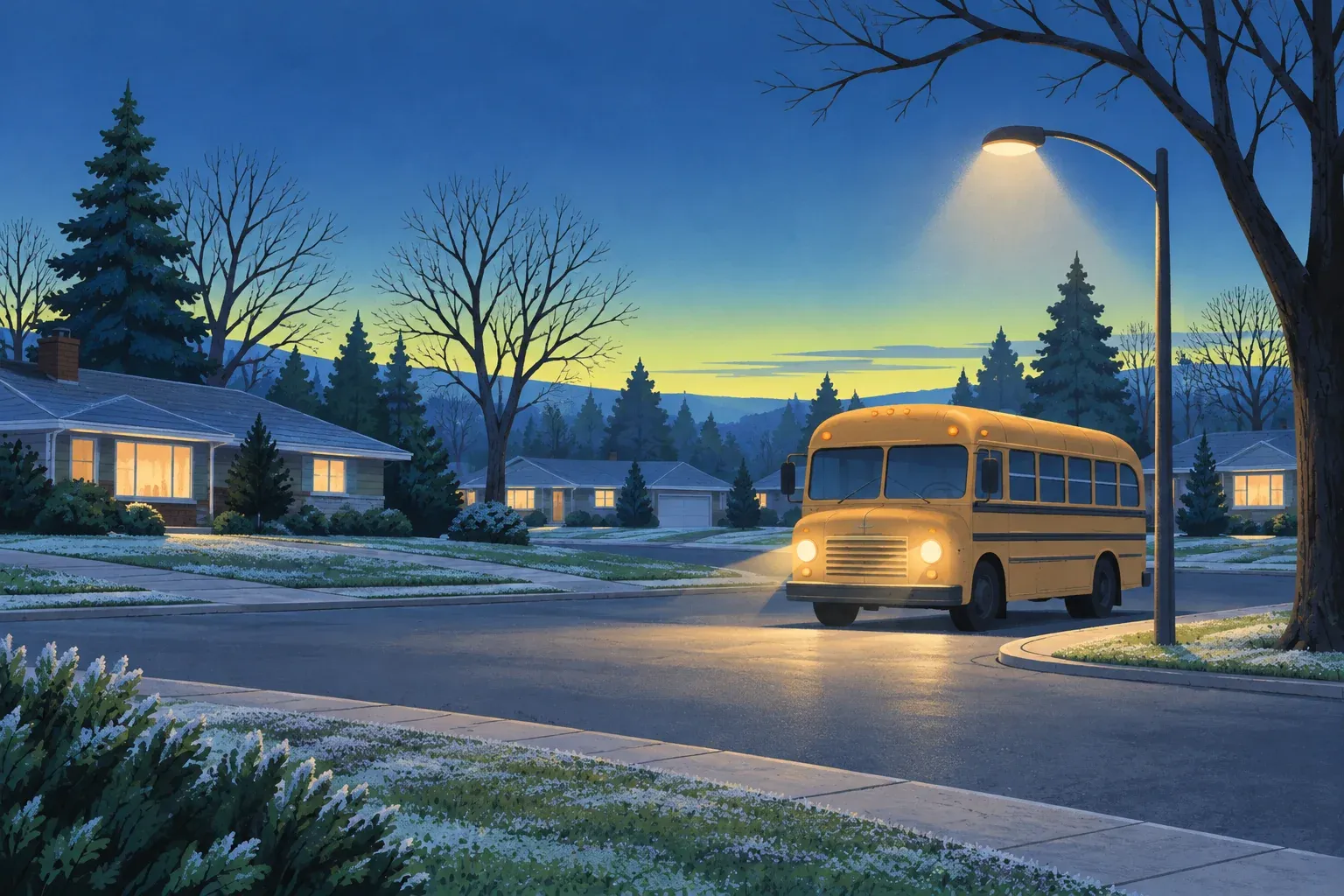
It didn’t make it. Sunrise came an hour later all winter, and parents worried about children walking to school and waiting for buses in the dark. After fatal morning crashes involving schoolchildren in Florida, Governor Reubin Askew asked for the law to be repealed. In October 1974, Congress put the country back on standard time from October 27 to February 23, 1975.
What a federal review found
A 1976 review by the National Bureau of Standards, summarized in the same Congressional Research Service report, found more morning traffic deaths among school-age children from January through April 1974 than in the same months of 1973. The bureau warned that the rise couldn’t be read as a plain daylight saving effect, because so many other things affect traffic deaths.
7. Halloween in daylight, 2007
The season has grown twice since 1966, first with a 1986 law and then with the Energy Policy Act of 2005, which took effect in 2007.
| Rule | Starts | Ends |
|---|---|---|
| 1987 to 2006 | First Sunday in April | Last Sunday in October |
| Since 2007 | Second Sunday in March | First Sunday in November |
In years when April 1 falls on a Monday, Tuesday or Wednesday, as it did in 2026, the current rule adds five weeks.
This year that meant March 8 to November 1, where the old rule would have given April 5 to October 25. The longer season now covers Halloween, which lands on Saturday, October 31. Members of Congress who backed the November end date, including Wyoming senator Michael Enzi, pitched it partly as more daylight for trick-or-treaters.
In Chicago, that means a 5:46 p.m. sunset on Halloween instead of 4:46 p.m. If you’re taking kids out, plan the first loop for before dark.
The energy payoff was tiny. The Department of Energy’s October 2008 report found the extension cut the nation’s electricity use by 0.03 percent in 2007.
8. The places that skip it
Most of Arizona stays on Mountain Standard Time all year. The state tried daylight time in 1967, and in an Arizona State University Q&A, historian Calvin Schermerhorn explains that energy use soared because air conditioners had to run longer into the hot evenings. Hawaii skips daylight time too, and so do five US territories, including Puerto Rico and Guam.
An island inside an island
The map inside Arizona is the oddest in the country. The Navajo Nation, which spans parts of Arizona, Utah and New Mexico, does observe daylight time. The Hopi Reservation sits entirely inside the Navajo Nation and doesn’t. In the same Q&A, Schermerhorn notes that a summer drive from Flagstaff to the Hopi village of Kykotsmovi means changing your clock twice, once entering the Navajo Nation and again entering Hopi land.
Indiana went the other way, holding out for decades and observing daylight time statewide only since 2006. If you call or fly to Phoenix after November 1, it’s one hour ahead of Los Angeles until the two match again in March.

9. A bill stuck halfway
On March 15, 2022, the Senate passed the Sunshine Protection Act, a bill to make daylight time permanent. It went through by unanimous consent, meaning no senator objected. The House never voted, and the bill died in January 2023.
On July 14, 2026, the House passed a new version 308 to 117, according to the House Clerk’s roll call. As of early October 2026, the Senate hadn’t voted on it, so your clocks still fall back on November 1.
The National Conference of State Legislatures counts 19 states with laws already passed to go to permanent daylight time once Congress allows it, and the Congressional Research Service lists the same 19. Check whether yours is one of them: Alabama, Colorado, Delaware, Florida, Georgia, Idaho, Louisiana, Maine, Minnesota, Mississippi, Montana, Oklahoma, Oregon, South Carolina, Tennessee, Texas, Utah, Washington and Wyoming. Idaho and Oregon count only for their Pacific-time portions, and some of these laws take effect only if neighboring states pass the same change.
What permanent daylight time would look like
Sleep doctors want the opposite fix. The American Academy of Sleep Medicine backs permanent standard time, which it says “aligns best with human circadian biology.”
On the shortest day of the year, permanent daylight time would move Chicago’s sunrise from 7:15 a.m. to 8:15 a.m. and its sunset from 4:23 p.m. to 5:23 p.m.
The sun stays up the same 9 hours and 8 minutes either way. What changes is the trade 1974 tested, brighter evenings for darker mornings. Look up your own town’s sunrise on December 21 and add an hour to see what the bill would mean for your mornings.
Before the clocks change
The clocks fall back at 2 a.m. on Sunday, November 1. Spread the academy’s advice over the 3 nights before it. This runs the other way from fixing a late sleep schedule, because here the clock moves, not you.
- Thursday, October 29. Go to bed 15 minutes later than usual, and sleep 15 minutes later on Friday morning.
- Friday, October 30. Make it 30 minutes later at both ends.
- Saturday, October 31. Make it 45 minutes later, which Halloween makes easy. Before bed, set back the clocks that don’t change themselves: the oven, the microwave, the car dashboard and any wall clocks.
- Sunday, November 1. Go to bed at your usual time on the new clock, a full hour later than your old bedtime.
If you’ve been short on sleep lately, the academy suggests skipping the later bedtimes and simply keeping the extra hour. The clocks jump ahead again on Sunday, March 14, 2027, so put a reminder on your calendar for Wednesday, March 10, to start the same steps in reverse.